
AI is Great(ly) WasteFul
- Taha Maknoo

- Feb 7
- 5 min read
Back when we were still using keypad phones and trying to switch up to 3G, Nimbuzz was one of the most popular communication apps. Especially for users whose phones didn’t support WhatsApp yet.
As soon as you downloaded Nimbuzz, you were greeted by a bot called “Jimmy Testbot”.
And believe me, Jimmy Testbot would have conversations with you at length about whatever you want. We had a ton of these bots across different apps you could talk to in the 2010s. Shoutout Clippy from Microsoft.
Right now, there’s no Jimmy Testbot.
But there’s something equally better (at least). It’s called ChatGPT (and 100 other AI chatbots).
An Important Overview
Nobody needs an introduction to ChatGPT anymore.
SEOs do their on-page SEO with it. Accountants double-check their ledgers. Meme pages make new stories. And developers build new micro-tools.
Most of us already rely on it to complete a ton of our tasks daily.
However, all the AI chatbots are at an important impasse - their future.
The Development of AI
We overestimated ChatGPT. At least for now, the text version of it is great - but not enough to cause an information revolution.
Simply put, it’s smart but not smart enough.
On one hand, it can teach you the reverse engineering of a rocket ship like you’re a 5-year-old.
On the other hand, it looks and works like a plagiarism engine that summarizes all the information it can find that others have written – and throws it up in front of you.
I’ll let you be the judge of how you create this distinction.
Will Smith’s spaghetti eating from 2023,

All the way up to 2026 has improved a lot.

AI now allows you to create and edit pictures, make videos that make (some) sense, and code for you.
As good as it has gotten, there’s still a major problem - AI is miles wide but just an inch deep.
The Current Problem With AI
AI is great at answering almost all questions and pointing you in the right direction.
But it’s also terrible at a ton of things.
AI is terrible at remembering past conversations.
AI is terrible at remembering context in the long run.
AI is terrible at creative output. It will follow you blindly.
AI is terrible at structuring responses properly.
Of course, there are a ton of problems with how AI performs. Since the tech is young, it’s bound to make mistakes and provide you with a fabricated output. The technicalities of that are something that a tech YouTuber will explain better than I would.
But the most important problem is that it does almost everything, but nothing well at all.
AI has been developing in image and video generation. But neither is it getting good at that, nor are the AI chatbots getting any better.
Imagine if AI development had just been limited to chatbots (at least for now). We’d have such realistic conversations that we wouldn’t think twice before trusting anything it said.
AND THE MOST IMPORTANT PART - Not everything would have gotten as expensive as it is right now.
Let me break it down for you.
The Cost of Text Generation
The conversations you and I have with ChatGPT are text-based. And text is one of the most inexpensive methods of AI output.
Here’s how it works:
Text Generation works on Large Language Models (LLMs).
When you type a message into a chatbot or writing tool, you’re giving the AI a set of words and instructions. These could be a question, a sentence to complete, or a rough idea you want expanded. The AI doesn’t “understand” your message the way a human does, but it recognizes patterns in language based on what it has seen before.
It reads your message from start to end
It looks at how words usually follow each other in similar situations
It predicts the next word that makes the most sense
It adds that word, then repeats the process
Each new word depends on everything that came before it

And this happens extremely fast - especially with newer models of AI chatbots. And to generate the output,
Text appears gradually, like typing
The tone and style depend heavily on how you phrase your prompt
If you change one sentence in your input, the output can change completely
Follow-up questions work because the AI keeps your recent messages as context
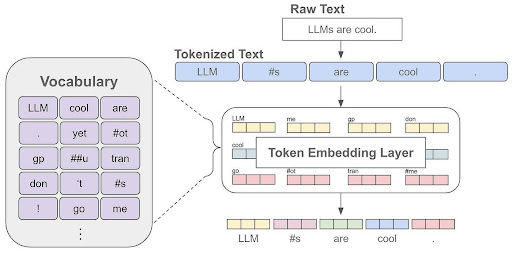
And usually, this is inexpensive because:
Text is lightweight and fast to generate
The AI only processes words, not images or motion
Responses take milliseconds, not seconds
In practical terms, generating a paragraph costs fractions of a cent. In fact, even long conversations cost very little. This is why chatbots are cheap, fast, and widely available.
But the case is pretty different when it comes to image generation.
The Cost of Image Generation
To generate images, you have a ton of tools already on the market. Everything from the OpenAI repository to Nano Banana from Google (and everything else in between), image generation and editing are becoming quite accessible - even for free users.
Unlike chatbots, image tools treat your prompt more like instructions than a conversation.

The image generation starts with a completely random, noisy image
It uses your text as guidance
Slowly reshapes the noise into a picture
Refines details step by step
Stops when the image matches the description
Instead of predicting words, the AI is deciding where shapes, colors, and textures should go.

In terms of costs, image generation is way pricier than text generation, because:
Images contain millions of data points
The AI must process everything at once
Multiple refinement steps are required
Practically, one image costs the same as generating thousands of words. Each image uses significantly more computing power, which is why image tools limit generations or charge credits.
The Cost of Video Generation
Video generation, naturally, is extremely expensive.
You’ve a million data points that feed off an input from a user. And the most important part - it needs to make sense.
You describe a scene, action, or short story. Some tools let you upload a reference image or video. Your input sets direction, but the AI fills in many gaps. And this is how it works:
Generates many images in sequence
Treats each image as a video frame
Tries to keep characters and objects consistent
Smooths motion across frames
Repeat this process dozens or hundreds of times
The AI isn’t making a video directly. It’s making many images that must agree with each other over time.

How the output works
Generation takes much longer
Videos are short
Motion may feel strange or unstable
Errors become more noticeable
In terms of costs, video generation consumes the most resources because every second of video = many images. This means that each image requires heavy computation, which, of course, means that mistakes require regeneration
In practical terms, one short video can cost as much as thousands of text responses, and pricing is often measured in seconds, not prompts.
Now Of Course
Much like every other type of technological development, AI will take time to mature.
And its development is equally important, especially since almost everybody is already pretty much completely reliant upon it.
But the cost we’re paying for this development is an overkill.
Computer equipment prices are significantly higher, resources like water are being used at an enormous rate, and electricity bills are through the roof.
All for what? Just for a better version of Will Smith eating spaghetti?
Not really!
Comments