Taha Maknoo

Zapier connects to thousands of apps. Instead of writing a page for each by hand, it built a system that generates a page for every app and every app-to-app combination automatically.
According to Ahrefs' case study, programmatic pages drive a large share of Zapier's millions of monthly organic visits.
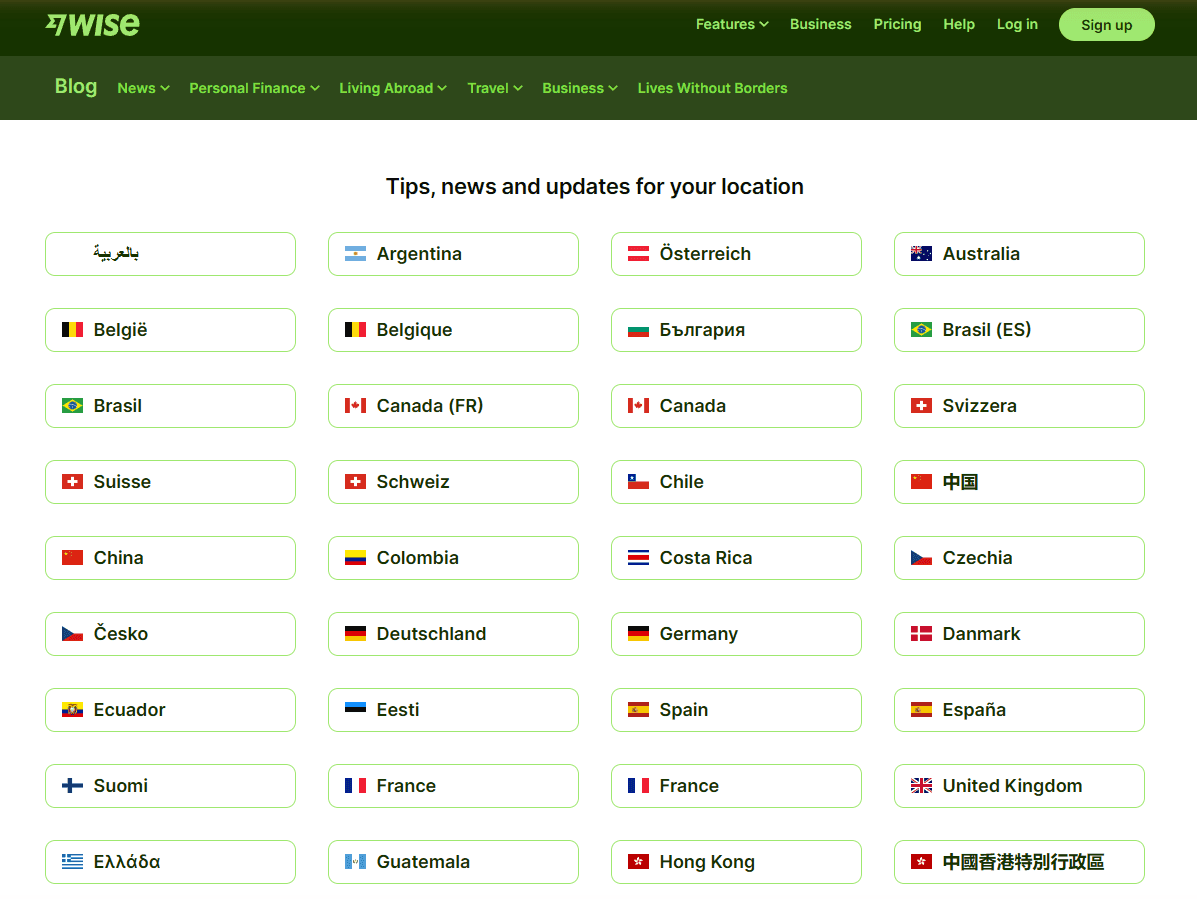
Wise did it for currency codes.
Canva did it for design templates.

Zillow did it for every home address in America.
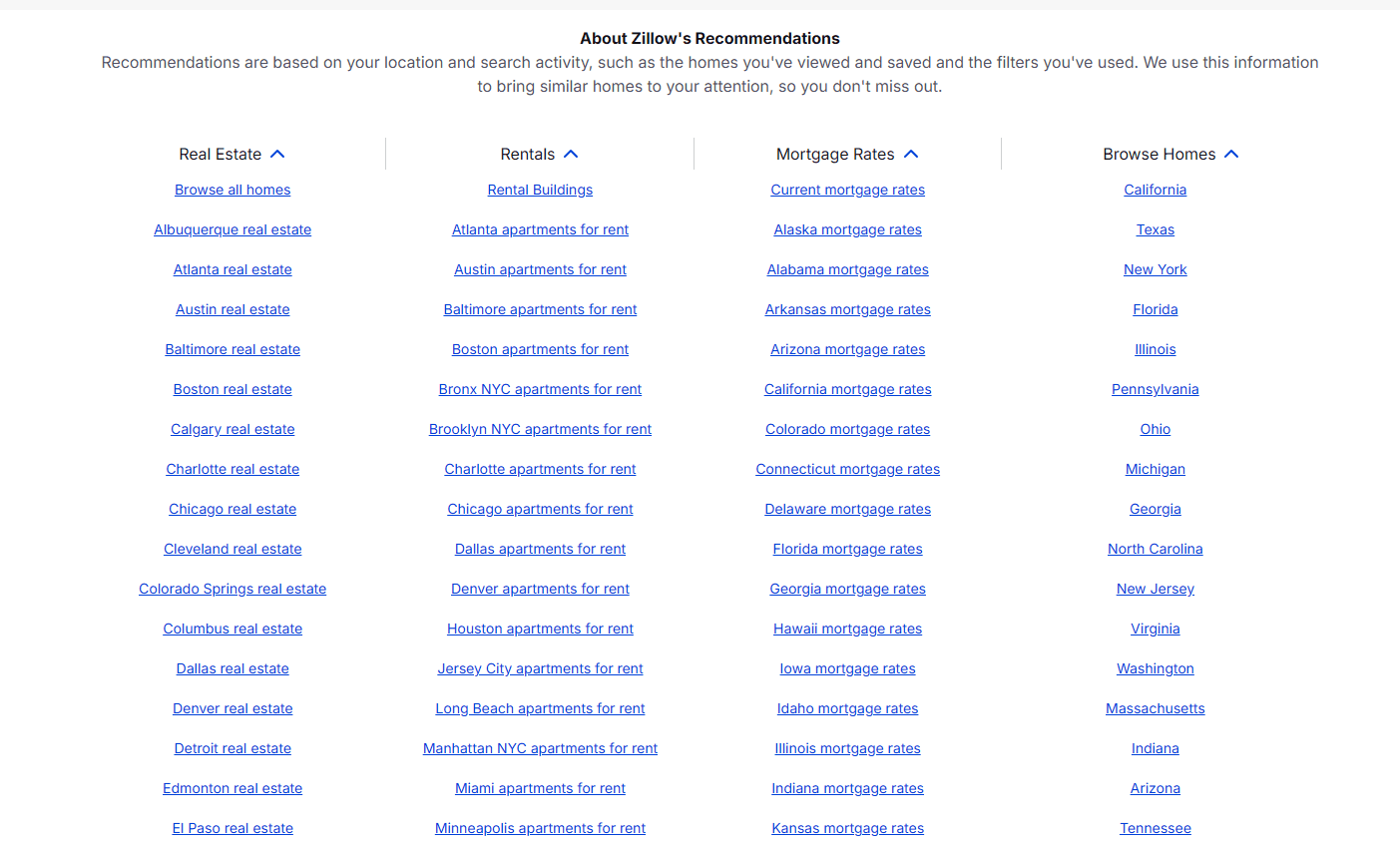
That is programmatic SEO at its best.
But 2026 is also the year programmatic SEO became genuinely risky to get wrong. Since March 2024, Google has been actively hunting the exact failure mode programmatic SEO slips into: thousands of near-identical, low-value pages built to game rankings.
If you’re genuinely interested in starting programmatic SEO for your business, this is the right guide for you.
What is programmatic SEO?
Programmatic SEO is the creation of keyword-targeted pages at scale using a template, a structured dataset, and a repeatable search pattern.
The concept is simple: You design one page once, then feed it data so it becomes hundreds or thousands of genuinely distinct pages. This applies to almost all industries.
If you have ever searched for something and landed on a page that seemed built precisely for your query, you have seen it in action.
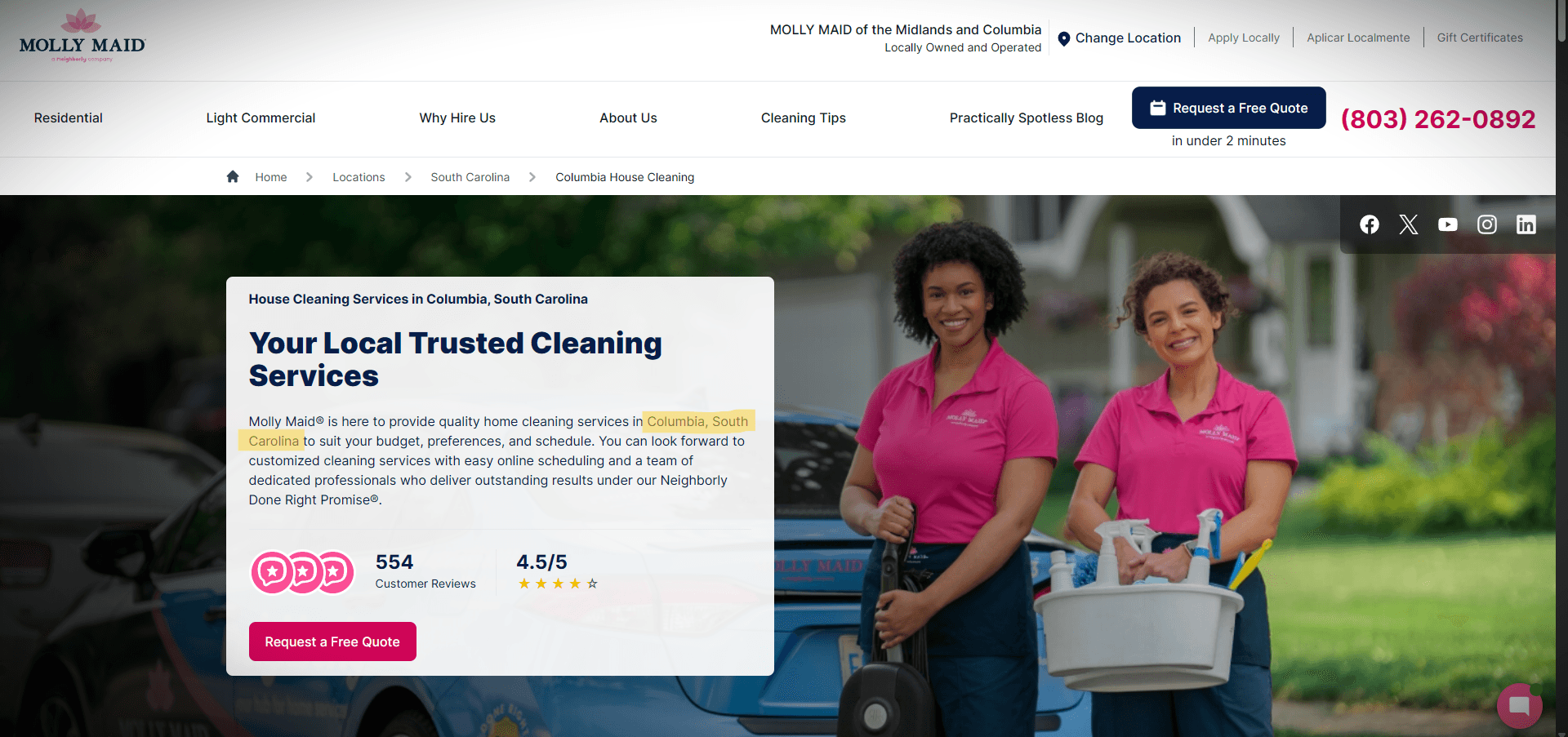
Caption: Cleaning Services “Molly Maid” in Columbia page
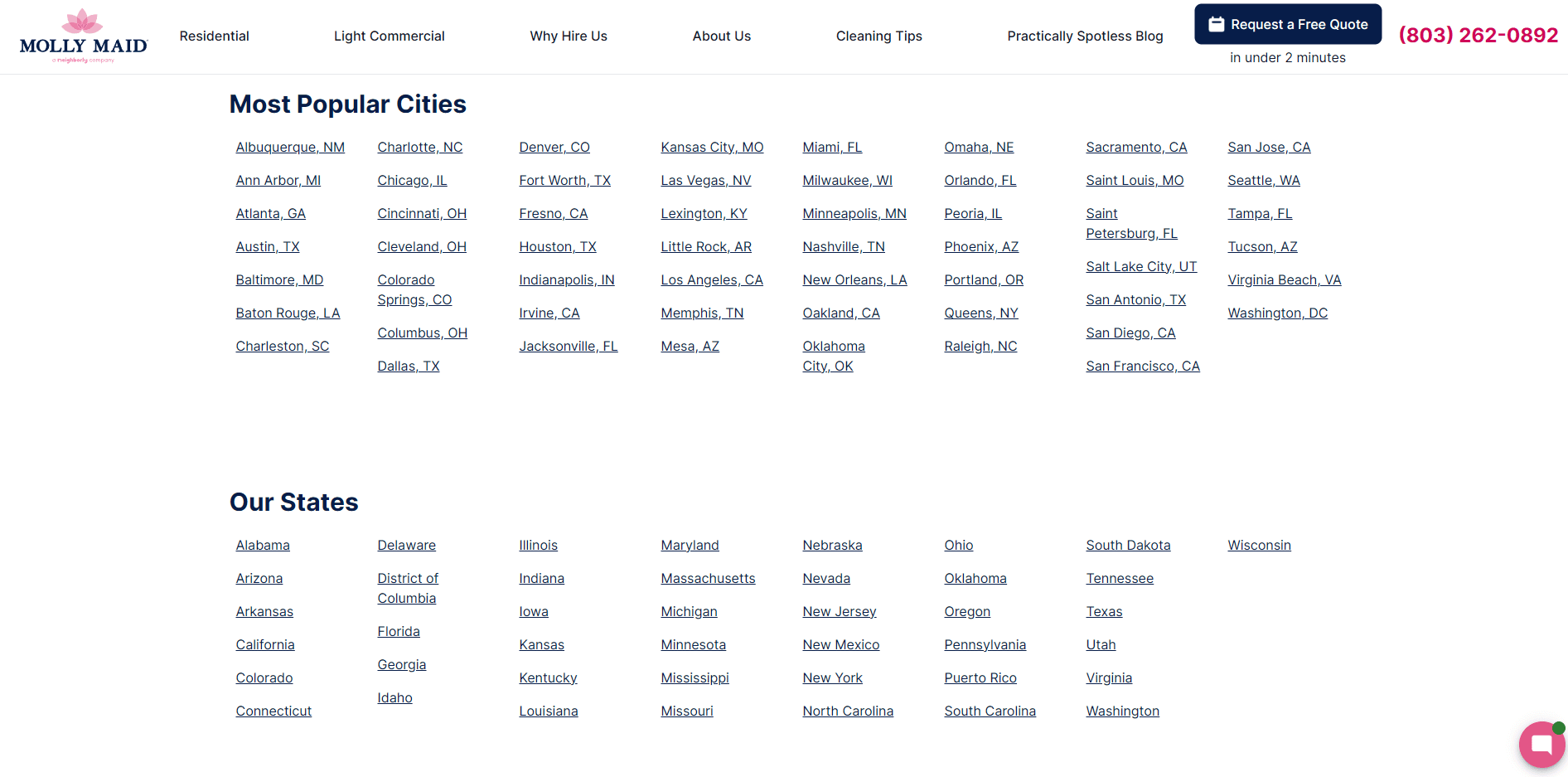
Caption: Other pages on the same site “Molly Maid”
The formula behind every program is simple:

The search pattern is a query formula people repeat with different variables: "best [service] in [city]," "[product] vs [competitor]," "[app] + [app] integration."
The structured data is the information that fills and differentiates each page. This is the part that matters most.
The template is a single layout that satisfies the search intent for every variation.
Get all three right, and you can answer an entire category of searches that would never justify hand-written pages one at a time, but collectively represent enormous demand.
How is Programmatic SEO different from traditional SEO?
Programmatic and traditional SEO are both different tools for different jobs.
Traditional SEO | Programmatic SEO | |
How pages are made | Manually, one at a time | Generated from a template plus data |
Best for | High-value, unique topics | Repeatable query patterns |
Content shape | Long, in-depth guides | Concise, data-rich, intent-matched |
Realistic volume | Tens of pages | Hundreds to millions |
Where humans spend time | Writing | Strategy, templates, data, review |
Most mature sites run both: hand-crafted pillar content for the topics that deserve a definitive guide, and programmatic pages for the long tail of repeatable, lower-effort-per-page queries.
When it works, and when to avoid it?
Programmatic SEO is not a fit for every page or every site. Use it when:
There's a repeatable search pattern with meaningful aggregate demand.
You have (or can build) a real, structured dataset to differentiate each page.
The intent is clear, and usually bottom-of-funnel (people deciding, not idly browsing).
Avoid or delay it when the only "data" you have is text an AI would generate anyway, when there's no genuine search pattern, or when the topic actually deserves a deep original guide instead of a templated page.
Non-negotiable prerequisite
Programmatic SEO layered on a messy sitemap falls flat. Pages need a clear hierarchy (categories, subcategories, consistent templates, sensible internal links) for Google to crawl and trust them. If you're not confident in your architecture, run a site audit and fix it first.
A fully worked example: coworking spaces by city
For your references, here's a complete build, start to finish, with live data pulled from Ahrefs in 2026.
Step 1: Find the pattern and size the demand
Start with a seed keyword and watch how it fragments into location variants. Here's what "coworking space" actually returns.
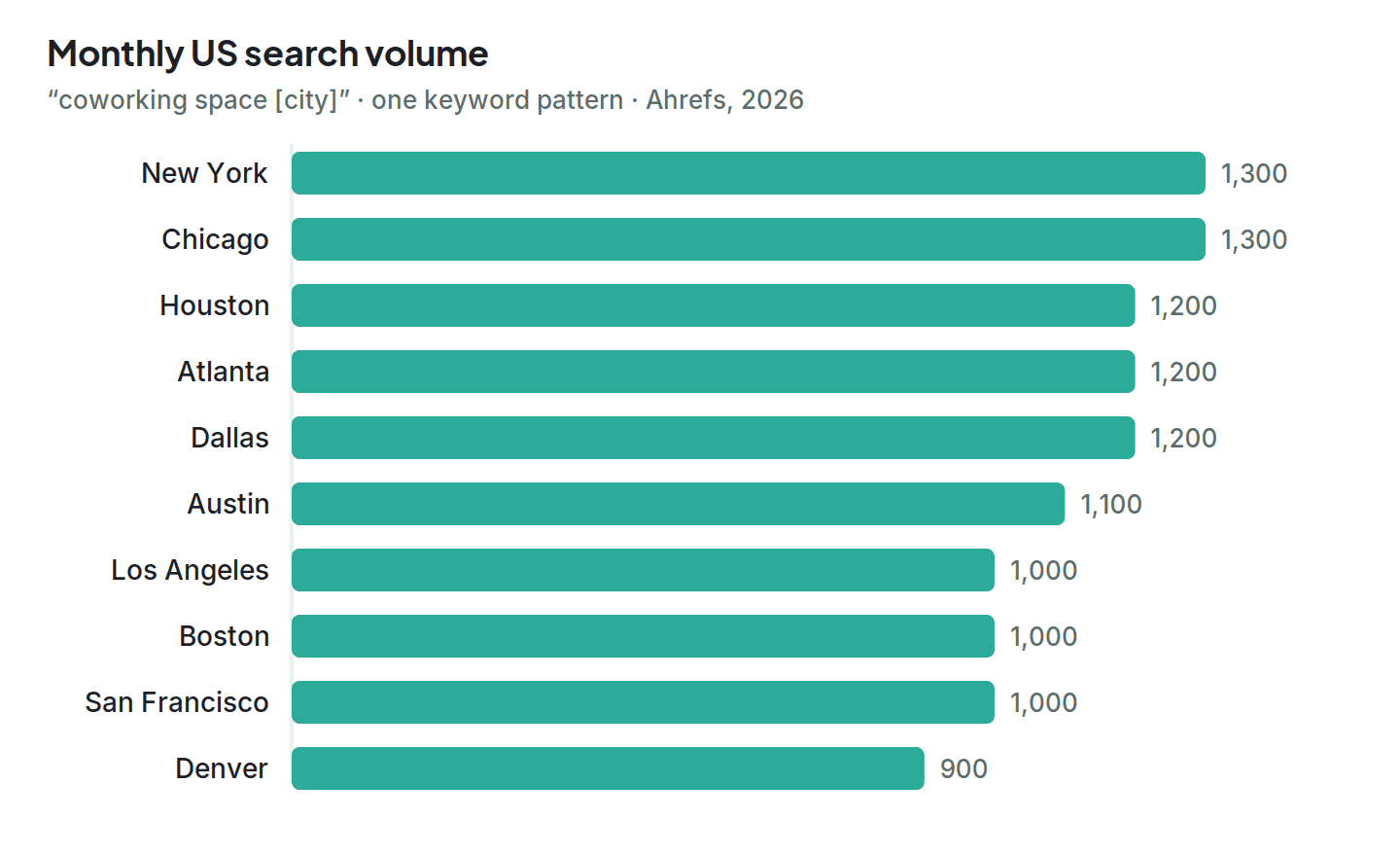
The ten cities shown add up to more than 11,000 monthly searches on their own, and this is only the top of the list.
Extend the pattern across the hundreds of other US cities with real coworking demand and you're looking at a keyword universe worth tens of thousands of monthly searches.
Better still, most of these terms sit at single-digit difficulty (Denver at 1, Los Angeles at 2, Chicago at 5, Houston at 6, Austin at 7), the profile of a pattern that a newer site can actually win.
Don't dismiss the lower-volume long-tail terms, either.
A keyword with 200 monthly searches and high intent can be worth more than a broad head term, because a page matching "coworking space with 24/7 access in Austin" converts far better than a generic one.
This case study by Jake Ward is an interesting read, especially for new businesses.
Step 2: Collect and clean the data
A city page that just swaps the city name is thin content, and Google will treat it as such.
The dataset is what makes each page real.
For coworking pages, you'd assemble the city and its neighborhoods, the actual spaces (name, address, hours), live ratings and review counts from Google Places, price ranges, amenities, and transit notes.
Then clean it before you use it.
Cleaning means catching the errors that would otherwise ship hundreds of times: a capital "O" where a zero belongs, a duplicate listing, or the classic disaster of pulling data for the wrong "Springfield" because a dozen US cities share the name.
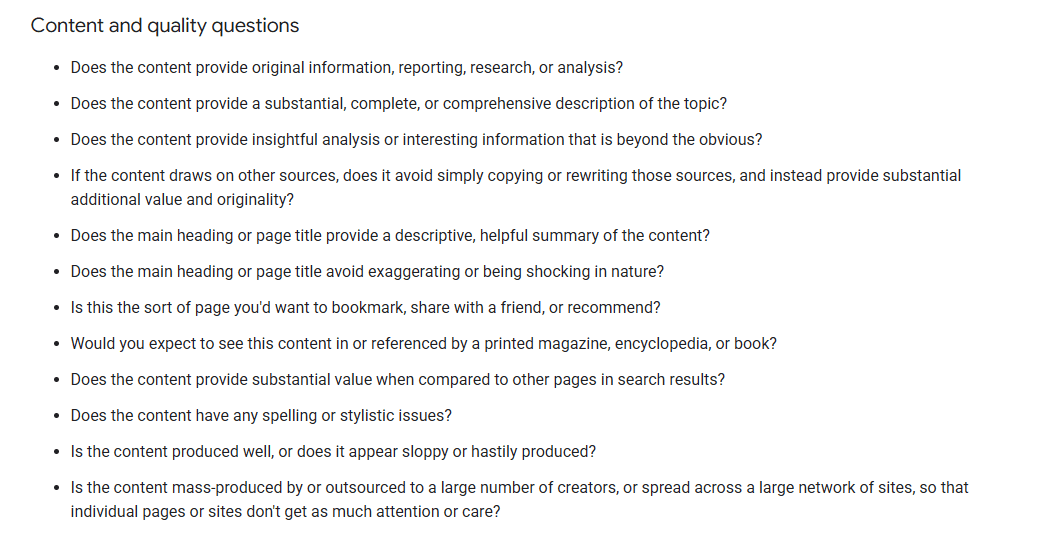
Dirty data at scale is worse than no data because it looks authoritative while being wrong. Here’s what Google recommends:
Step 3: Structure it, and map every field to your template
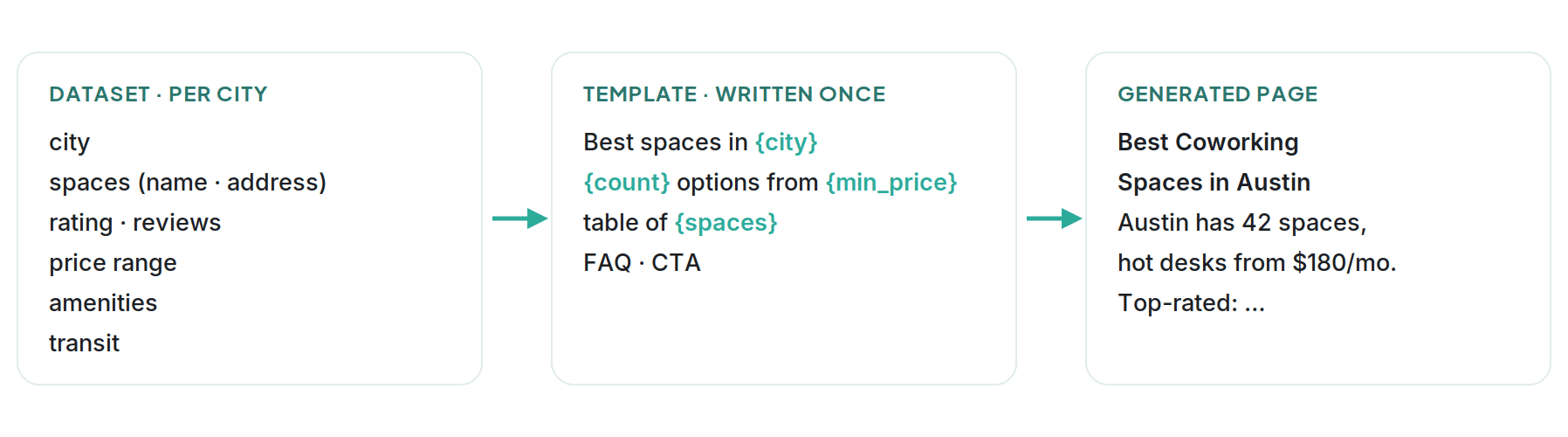
Put the cleaned data into a database with a column for every element your template needs.
The rule is that every variable slot in the template must map to a database field. If the template asks for {min_price}, the database has a min_price column for every row.
Step 4: Design the template
Map the fields to a layout with variable slots:
A placeholder like "The best coworking spaces in {city} for {persona}" becomes "…in Austin for remote teams" or "…in Denver for solo freelancers." Written once, resolved thousands of ways.
Step 5: Generate and pressure-test
Merge the database into the template to produce the full set. Then review a sample by hand.
Does the Austin page read like a real, useful page?
Does it differ from the Denver page in substance, not just the city name?
If two pages feel interchangeable, your dataset is too thin. Fix the data, not the wording.
This is also where you resist letting AI write the visible body copy freehand. The value on the page should come from your data; AI is best used to structure and format that data, not to invent front-end prose that ends up identical to every competitor pulling from the same model.
Step 6: Publish, link, and index
Push the pages to your CMS, add them to your sitemap, and build internal links: a hub page linking to every city, and cities linking to nearby cities. Orphaned programmatic pages rarely get crawled, so structure is not optional.
Advanced Programmatic SEO tactics
The basic "one dataset, one template" approach still works, but it's no longer enough to stand out. The programs winning now go further.
1. Stack multiple datasets for intersection queries
Depth beats breadth. Instead of one data source spread across 10,000 pages, combine three or four sources to target hyper-specific, high-converting queries. Layer coworking data with pricing, amenities, and transit data and you can rank for "coworking spaces in Austin with 24/7 access under $250 a month," a query almost no competitor thought to target and that converts far better than the generic version.
2. Add genuinely useful interactive elements
A filter, a price calculator, a comparison toggle, or an embedded map turns a static page into a tool. Interactivity boosts engagement, is hard to detect as templated, and signals to Google that the page is built for users.
3. Integrate user-generated content
Real reviews, ratings, and Q&A make a page authentic in a way generated text can't, and they refresh the page over time without manual work. UGC is one of the most durable ways to keep programmatic pages from feeling thin.
4. Present your data so it's hard to copy
Assume competitors will try to scrape and re-use your data. Structuring your key insights into a distinctive visualization (a chart, a scored index, an interactive table, like the demand chart above) makes your version the one worth citing and linking, and harder to clone.
10 Programmatic SEO examples, dissected
Every program below shares three traits: a repeatable pattern, a proprietary dataset, and a template that answers intent for every variation.
Notice how, in each case, the dataset is the thing competitors can't copy.
Company | What they built | Their dataset (the moat) | Scale |
Zapier | A page for every app and app-to-app integration | Its integration database of thousands of apps | 25,000+ pages |
Wise | Currency conversions, SWIFT/IBAN codes, bank details | Live exchange-rate engine and banking data | 3,000+ pages |
Canva | A landing page for virtually every template type | Its template library | 30,000+ pages |
Zillow | A page for every home, ZIP code, and neighborhood | Property listings and valuation data | Millions of pages |
TripAdvisor | Hotels, restaurants, and things to do everywhere | Decades of user reviews and ratings | Millions of pages |
G2 | Every software category and comparison | Verified user reviews | 100,000+ pages |
Glassdoor | Company reviews, salaries, and interviews | Employee-submitted salary and review data | Millions of pages |
Nomad List | A page for every city a remote worker might live in | Structured cost, weather, quality-of-life stats | 1,000+ pages |
Retool | Template and use-case pages for internal tools | Its component and template library | 100k+ visits/mo |
Calendly | Every scheduling use case and integration | Its integrations and use-case data | 1.1M+ visits/mo |
Data is the moat, not the template. Anyone can build a "best coworking spaces in {city}" template in an afternoon. Almost nobody can assemble live, accurate coworking data for 300 cities.
The best patterns are bottom-of-funnel. Zapier's integration pages, G2's comparisons, and Wise's currency pages all catch people close to a decision, which is why they convert, not just attract.
Scale follows a proven pattern; it doesn't precede it. Every one of these started by nailing a single pattern, then expanded. None launched with a million pages on day one.
The 2024–2026 Google reckoning
Here is what most older guides skip or wave at vaguely, and what matters most now. In March 2024, Google introduced a spam policy called Scaled Content Abuse.
Its official documentation defines it as generating many pages "primarily to manipulate search rankings" with little or no value for users.
The framing was deliberate: the policy targets intent and outcome, not the production method. AI content is not automatically a violation, and handwritten thin content is not exempt.

One pattern-detection detail is worth internalizing: launching thousands of pages simultaneously can itself look like manipulation. Aggressive publishing velocity is a flag. Roll pages out in considered batches rather than dumping the whole set overnight.
The sites that survived shared one trait: demonstrable first-hand experience and expertise, the qualities Google bundles under E-E-A-T (experience, expertise, authoritativeness, trustworthiness).
The lesson is not "avoid programmatic SEO." It's that programmatic SEO now demands the one thing it was often used to skip: real value on every page.
How to scale without a penalty?
Feed every page real data. Pull from live sources so no page is a hollow shell. Your single biggest protection against the scaled-content policy.
Guarantee meaningful variation. Swapping a city name is not differentiation. Deterministic variation logic, not find-and-replace, keeps a large set out of near-duplicate territory.
Keep a human in the loop. A preview-and-refine step catches the thin sections that would otherwise ship hundreds of times.
Strip the AI tells. Formulaic phrasing, filler modifiers, stale years, and giveaway punctuation are exactly what detection systems look for.
Publish at a sane pace, and match real intent. Roll out in batches, and only build pages where genuine demand exists.
Where does GroGoliath fit?
This is the exact workflow GroGoliath was built around: it generates every page type above in bulk, injects real data from Google Places, Ahrefs, and your own uploads so each page is distinct, filters out AI tells automatically, and keeps a human review step before anything publishes, all inside Google's guidelines. See the full compliance-first toolkit on the features page.
Frequently asked questions
1. Is programmatic SEO against Google's guidelines?
No. Programmatic SEO is fully allowed. What Google penalizes is scaled content abuse: mass-produced pages with little value, regardless of whether AI or a human made them.
2. Does Google penalize AI-generated content?
Not for being AI-generated. Google's stated focus is helpfulness and quality, not the production method. Thin, unoriginal content gets penalized whether a human or a model wrote it.
3. How many pages do I need?
There's no minimum. Some effective programs are a few hundred pages; others run into millions. Start with one pattern and a small batch, then scale what works.
4. How long does it take to work?
Expect months, not weeks. Pages need to be indexed, then earn rankings as the site builds authority. Lower-difficulty patterns move first.
5. Do I need to code?
Not anymore. Modern platforms handle the pattern, data injection, generation, and CMS publishing, so non-technical teams can run programs that once required engineers.

Taha Maknoo
Content & SEO Strategist
Taha Maknoo is a content strategist and SEO specialist who writes about programmatic SEO, content operations, and scaling organic growth. He helps businesses build systems that turn thousands of pages into durable search traffic.
Start generating landing pages and blog posts at scale
